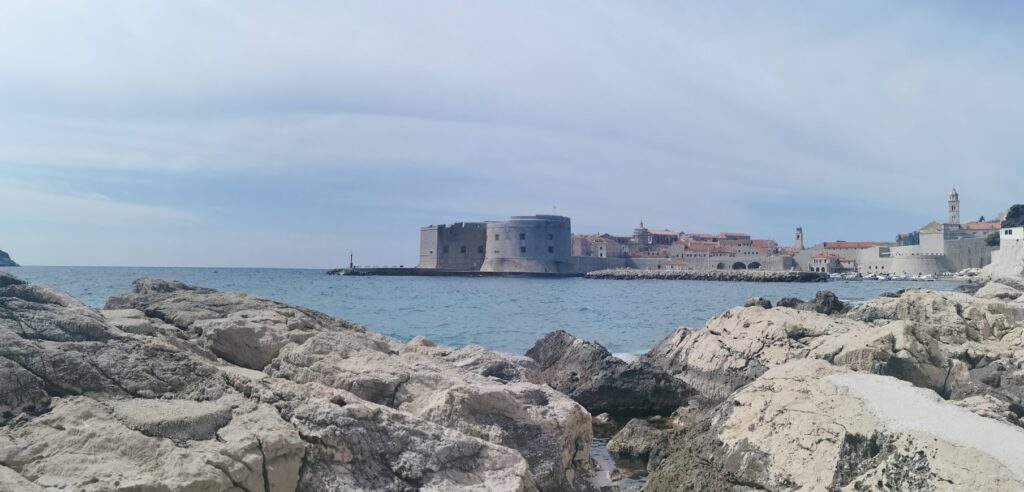
Dear fellow travelers, welcome back to the blog!
Today, on January 9th, we look back at a dark but fascinating chapter of our history. While many know Dubrovnik for its stunning walls, few realize it was a global pioneer in medicine and crisis management. Long before modern science, our ancestors invented a system that changed the world: the quarantine.
The Strategic Power of the Independent Republic of Ragusa
It is essential to understand that during its golden age, Dubrovnik was not part of any larger country; it was the Republic of Ragusa, a fully independent city-state. Despite its small size, it was known as the smallest and wealthiest republic in the world.
The Smallest and Wealthiest Republic in the World
Situated between the formidable Ottoman Empire and the Republic of Venice, Ragusa was a diplomatic and economic miracle. By remaining an independent republic, it became the most vital commercial gateway on the Adriatic. Its wealth was legendary, built on a massive merchant fleet and a genius for “selling” its neutrality to everyone, from the Mediterranean to the Balkans.
The Black Death: A Threat to the Trade Empire
Bubonic plague, or the Black Death, was the ultimate fear of this wealthy merchant state. Caused by the bacterium Yersinia pestis, it brought painful buboes, high fever, and certain death. For a republic that relied entirely on open trade routes, a single infected ship was more dangerous than an invading army. To protect its citizens and its wealth without closing the port, Ragusa innovated.
The Evolution of the First Quarantine in the World
The concept of “quarantena” (meaning 40 days) was officially born here. The Republic was the first in the world to codify these health laws, creating a system that we still use globally today.
From Cavtat to the Island of Lokrum
The journey to the Lazareti we see today was long. In 1377, the first isolation sites were established on the small, uninhabited islet of Mrkan, located directly across from today’s town of Cavtat. As the Republic sought better protection, the isolation zone moved to the island of Lokrum, keeping the “invisible enemy” further from the city’s stone heart.
The Lazareti: A Monument to Public Health
Eventually, the Republic built the massive Lazareti complex at the Ploče gate. This stone masterpiece was the world’s most sophisticated defense against disease. It allowed the wealthy republic to continue its trade while ensuring that every visitor and every bale of silk was “cleansed” before entering the city.
The Hidden Enemy: Fleas, Rats, and Ships
Despite these brilliant laws, the plague sometimes slipped through. People at the time believed in “bad air,” unaware that the real killers were fleas living on black rats. When ships sat in quarantine and food ran low, the rats would swim from the ships to the city docks, carrying the plague in their fur.
Cats: The Guardians of the Republic
After realizing that rodents were the key to the outbreaks, the Republic turned to a natural solution. They encouraged the presence of cats within the city walls to hunt the “plague-bearers.” These small hunters became essential to the survival of the city, and to this day, the cats of the Old City remain a living legacy of that era.
Explore the secrets of the Republic with me!
If you are looking for unique things to do in Dubrovnik and want to understand how the world’s smallest republic became its smartest, a visit to the Lazareti is a must.
If you would like to uncover more stories of the Republic of Ragusa during your next visit to Dubrovnik, please reach out to me directly via my contact page. I would be honored to show you the history and resilience of my hometown through a personalized guided tour.
See you soon!
Vesna